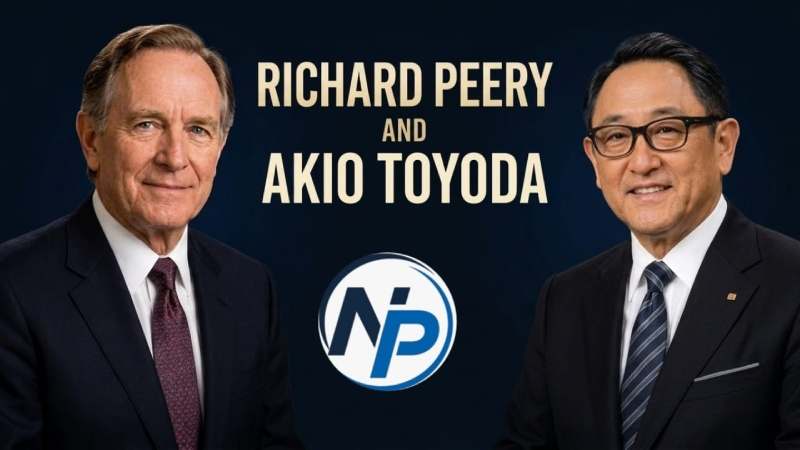
The business world includes leaders from very different industries who have influenced organizations through vision, discipline, investment, and long-term thinking. Two names that represent very different areas of achievement are Richard Peery and Akio Toyoda. Their professional backgrounds are distinct, but examining their careers provides useful lessons about leadership, business strategy, innovation, and the importance of adapting to changing markets.
Richard Peery is widely recognized for his career in real estate investment and business, while Akio Toyoda is best known for his leadership within Toyota and his role in the global automotive industry. Their professional journeys demonstrate how effective leadership can take different forms depending on the industry, economic environment, and goals of an organization.
Understanding Richard Peery and Akio Toyoda requires looking beyond their names and examining the experiences, decisions, and principles associated with their careers.
Who Is Richard Peery?
Richard Peery is an American businessman and investor who became particularly known for his work in real estate. His career has included significant involvement in property investment and development, and he has also been associated with Stanford University through major philanthropic support.
Peery built his reputation in a field where long-term thinking is especially important. Real estate investments can involve substantial capital, changing economic conditions, property cycles, and complex financial decisions. Successful investors need to understand both immediate opportunities and the long-term potential of an asset.
His professional story is also connected with education and philanthropy. His contributions have supported institutions and educational initiatives, reflecting a broader approach to business success in which financial achievement can be combined with support for future generations.
Richard Peery’s Business Background
Real estate requires a combination of financial analysis, market awareness, patience, and risk management. Investors must evaluate locations, property values, financing conditions, demand, and broader economic trends before making major decisions.
Peery’s career illustrates the importance of recognizing opportunities while maintaining a long-term perspective. Property investments can take years to mature, meaning that successful strategies often require patience rather than a focus on immediate results.
Another important aspect of his professional background is the relationship between wealth creation and philanthropy. Business leaders who accumulate significant resources can influence society through education, research, community development, and charitable initiatives.
This broader perspective makes Peery’s career interesting not only from an investment standpoint but also from the perspective of responsible wealth management.
Who Is Akio Toyoda?
Akio Toyoda is a prominent Japanese business executive and a member of the Toyota family. He served as president and chief executive officer of Toyota Motor Corporation before becoming chairman of the company.
His career has been closely associated with one of the world’s largest and most influential automobile manufacturers. Toyota operates across numerous markets and has developed a reputation for manufacturing quality, operational efficiency, and continuous improvement.
Akio Toyoda’s leadership has also been shaped by major changes in the automotive industry. Automakers have faced increasing competition, changing consumer preferences, environmental concerns, technological development, electric vehicles, connected cars, and new mobility services.
These changes have required Toyota to consider its future beyond traditional automobile manufacturing.
Akio Toyoda and Toyota’s Long-Term Approach
One of the defining characteristics associated with Toyota’s business philosophy is long-term thinking. The company became internationally recognized for manufacturing methods emphasizing efficiency, quality control, continuous improvement, and waste reduction.
During his leadership, Akio Toyoda often emphasized the importance of understanding automobiles from the customer’s perspective. He also maintained a strong interest in driving and motorsports, which helped shape his personal connection with the products Toyota develops.
The automotive industry is highly competitive, and major manufacturers must balance technological development with reliability, affordability, safety, and consumer demand. Toyota’s approach has involved investing across several technological pathways rather than relying entirely on one solution.
This has included hybrid vehicles, battery-electric vehicles, hydrogen fuel-cell technology, and other forms of mobility development.
Leadership Lessons From Their Careers
Although Richard Peery and Akio Toyoda worked in different industries, their careers offer several broader lessons about leadership.
Think Beyond Short-Term Results
Successful businesses often require decisions that may not produce immediate results. Real estate investments can take years to mature, while major automotive technologies may require enormous research and development investments before becoming commercially successful.
Long-term thinking allows leaders to prepare for changing conditions rather than simply reacting to today’s market.
Understand Your Industry
A strong leader needs a deep understanding of the environment in which an organization operates. Real estate depends heavily on economic conditions, locations, financing, and demographics.
Automotive businesses require knowledge of manufacturing, engineering, consumer behavior, regulations, energy systems, and global markets.
Industry expertise helps leaders identify risks and opportunities more effectively.
Adapt to Change
Markets rarely remain stable forever. Consumer preferences change, technology develops, and economic conditions shift.
Akio Toyoda’s career demonstrates the challenges of guiding a traditional automobile company through a period of rapid technological change. Real estate investors such as Peery have similarly operated in markets affected by changing interest rates, property demand, economic cycles, and investment conditions.
Adaptability does not mean abandoning established principles. Instead, it means applying those principles intelligently as circumstances change.
Business Strategy and Risk Management
Risk management is another important theme when studying Richard Peery and Akio Toyoda.
Real estate investing can involve significant financial exposure. Property values may rise or fall, financing costs can change, and market demand can vary between locations. Investors therefore need to evaluate potential risks before committing capital.
The automotive industry has its own complex risks. Manufacturers invest billions in factories, research, technology, supply chains, and product development. A major change in consumer demand or technology can affect these investments.
Good leadership involves recognizing that risk cannot always be eliminated. Instead, it must be understood, measured, and managed.
The Importance of Innovation
Innovation is often associated with technology, but it can take many forms.
In real estate, innovation can involve investment strategies, property development, financing structures, or approaches to managing assets. Successful investors must identify opportunities that others may overlook.
In the automotive sector, innovation is much more visible. Vehicles have evolved through improvements in safety, fuel efficiency, software, connectivity, automation, and alternative powertrains.
Akio Toyoda’s leadership period occurred during a particularly important transformation in the automobile industry. Companies have had to consider how transportation may change as environmental regulations, technology, and customer expectations evolve.
Philanthropy and Social Contribution
Business success can also create opportunities to support society. Richard Peery’s philanthropic activities demonstrate how private wealth can be directed toward education and other public-benefit initiatives.
Philanthropy can have a long-lasting impact because investments in education can benefit students, researchers, institutions, and communities for many years.
Corporate leaders can also influence society through their decisions about employment, environmental responsibility, product safety, and community engagement.
The broader lesson is that leadership is not limited to financial performance. Reputation and social contribution can become important parts of a person’s lasting legacy.
Comparing Their Leadership Styles
Comparing Richard Peery and Akio Toyoda should be done carefully because they operated in different professional environments.
Peery’s career is strongly associated with investment and real estate, where patience, financial judgment, and asset management are important. Toyoda’s career has been centered on corporate leadership, manufacturing, engineering, mobility, and global competition.
Their differences show that there is no single formula for effective leadership.
An investment leader may spend considerable time evaluating whether an asset is worth acquiring, while an automotive executive may need to coordinate thousands of employees and complex international operations.
Despite these differences, both fields reward careful decision-making and long-term thinking.
What Entrepreneurs Can Learn From Them
Entrepreneurs can take several practical lessons from their professional experiences.
First, specialization matters. Developing strong knowledge of a particular industry can provide an advantage when making important decisions.
Second, patience can be valuable. Not every successful strategy produces immediate results.
Third, leaders should remain aware of changing conditions. A business model that works today may require adjustment tomorrow.
Finally, reputation matters. Business relationships, professional credibility, and responsible decision-making can influence long-term success just as much as financial results.
Why Their Stories Remain Relevant
The careers of Richard Peery and Akio Toyoda remain interesting because they represent two different approaches to business leadership.
Peery’s story highlights investment, wealth management, real estate, and philanthropy. Toyoda’s story highlights global corporate management, manufacturing, mobility, technology, and organizational transformation.
Together, these examples demonstrate that business leadership can be successful in many different forms. What matters is the ability to understand challenges, make informed decisions, manage risk, and maintain a clear sense of long-term objectives.
The Role of Legacy in Business
A person’s business legacy is rarely defined by one decision or one achievement. It develops over decades through professional work, relationships, investments, leadership decisions, and contributions to society.
For an investor, legacy may include properties developed, businesses supported, and educational institutions strengthened through philanthropy.
For a corporate leader, legacy may involve organizational performance, technological development, employees, products, and strategic decisions made during periods of change.
This broader idea of legacy provides a useful way to understand the careers of Richard Peery and Akio Toyoda.
Frequently Asked Questions
Who is Richard Peery?
Richard Peery is an American businessman and investor known particularly for his work in real estate and for philanthropic contributions, including support connected with Stanford University.
Who is Akio Toyoda?
Akio Toyoda is a Japanese business executive and member of the Toyota family. He served as president and CEO of Toyota Motor Corporation and later became chairman.
Are Richard Peery and Akio Toyoda from the same industry?
No. Peery is primarily associated with real estate investment and philanthropy, while Toyoda is associated with the automotive industry and corporate leadership.
What leadership lessons can be learned from their careers?
Their careers highlight the value of long-term thinking, industry knowledge, risk management, adaptability, and responsible decision-making.
Why is Akio Toyoda important to the automotive industry?
He led Toyota during a period of significant technological and market changes, including the growing importance of electrification, mobility technology, and changing customer expectations.
What is Richard Peery known for besides business?
Richard Peery is also known for philanthropic support, particularly in education and initiatives associated with Stanford University.
Final Thoughts
The stories of Richard Peery and Akio Toyoda show that successful leadership can develop in very different industries and circumstances. One built a reputation through real estate investment and philanthropy, while the other became a major figure in global automotive leadership.
Their careers offer useful lessons about patience, innovation, risk management, adaptability, and long-term thinking. For entrepreneurs, investors, and business students, studying different leadership journeys can provide valuable perspectives on how organizations grow and how professional legacies are created.
Ultimately, successful leadership is not simply about achieving financial results. It is also about making thoughtful decisions, responding to change, understanding long-term consequences, and creating value that can continue beyond an individual career.